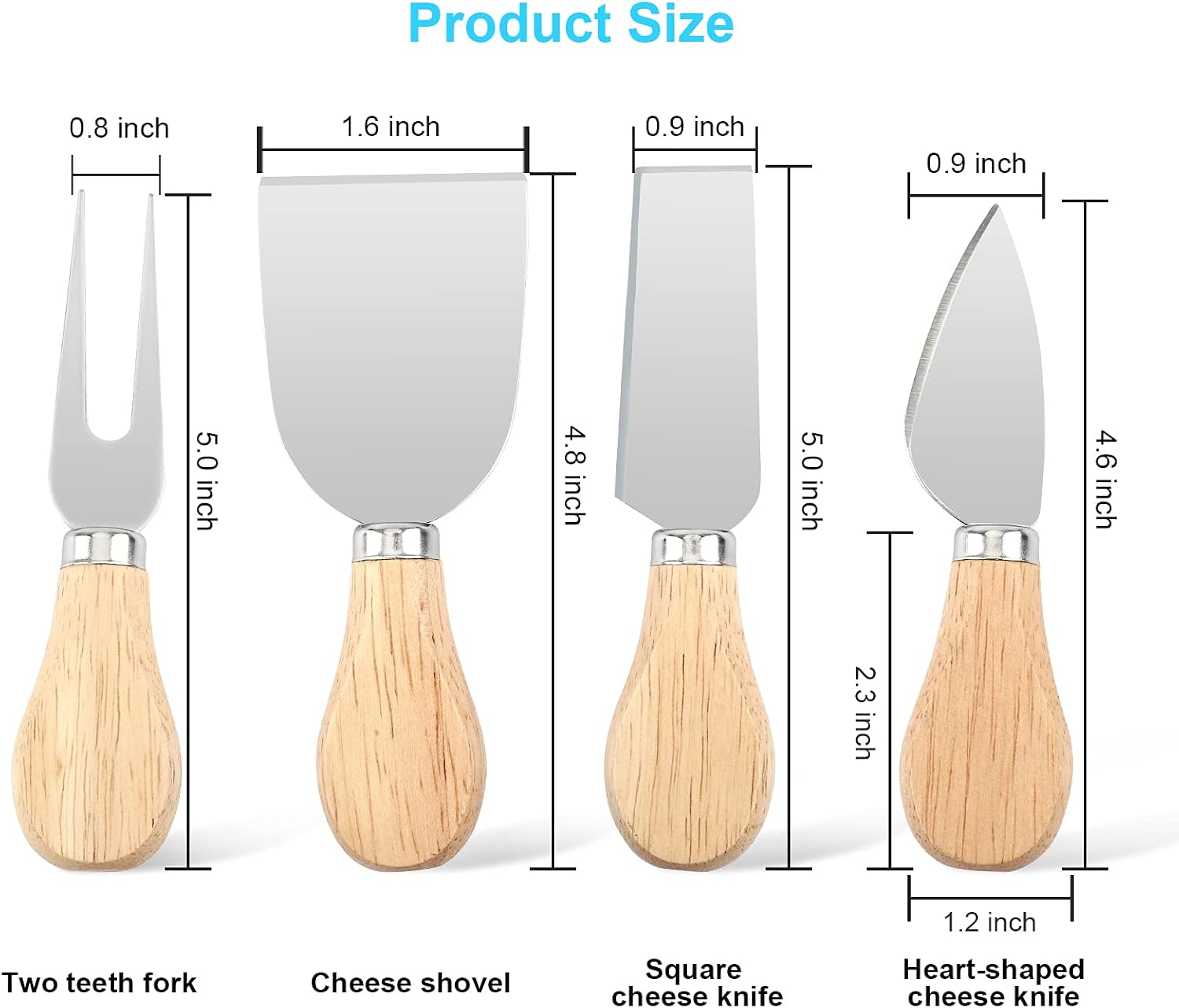
When someone opens a premium cheese and charcuterie basket — the kind that arrives with a Murray’s or Zingerman’s card inside — the first thing they reach for isn’t the cheese. It’s whatever tool the basket includes to cut it. That tool is either a cheese knife (a blade designed specifically for the texture of a given cheese — hard, semi-firm, or soft) or a general spreader, and the difference matters more than most gift-givers realize. A $280 basket sitting next to a flimsy, short-bladed knife communicates something unintentional about the care behind the gift. On the other side: a thoughtfully chosen slate board, a purpose-built knife set, and a few well-placed accompaniments can elevate a $75 artisan assortment into a memorable spread. This guide cuts through the catalog photography to tell you what actually distinguishes functional hardware from decorative dead weight — by material, by use case, and by honest price band.
Why Cheese Knives Aren’t Interchangeable (And What That Costs You If You Ignore It)
Here’s the tradeoff almost no product listing explains plainly: cheese texture determines blade geometry, and buying a single “all-purpose” cheese knife is usually a compromise that serves no cheese particularly well.
The four knife types that actually matter in practice:
Hard cheese knives (think aged Parmigiano-Reggiano, Manchego, or cave-aged Gruyère) need a short, stiff blade with enough leverage to crack or cleave. The cheese is crumbly and crystalline; dragging a flexible blade through it compresses and gums up the texture. Serious Eats’ review of best cheese knives specifically flags this as the most common mismatch in bundled sets — soft-blade knives included in sets that photograph well but struggle on anything aged over 18 months.
Semi-firm knives (Comté, aged cheddar, Gouda) benefit from a blade with offset handles or holes punched through the flat — those holes reduce the surface contact between blade and cheese, preventing sticking. Food & Wine’s 2025 cheese knife roundup rates this feature as the single highest-impact design element for everyday use.
Soft cheese knives and spreaders (Brie, Camembert, fresh chèvre) need a thin, flexible blade or a wide paddle — the goal is a clean smear, not a cut. The trickiest cheeses here are the bloomy-rind types (Brie-style wheels with a soft, edible white exterior crust called the rind). Dragging a stiff knife tears the rind and makes a messy presentation.
Chisels and cleavers are niche but genuinely useful for crumbly blues and aged hard cheeses where you want rustic chunks rather than slices. Owners who use these consistently report that the ceremonial aspect — breaking rather than slicing — actually becomes part of the table experience.
The decision frame: If you’re sourcing accessories for a basket that will include only one or two cheese types, you can match knife to cheese precisely. If you’re building a multi-cheese assortment (which most $100+ baskets are), the math favors a 3- or 4-piece set over a single “premium” knife. More on what to pay for those in the next section.
Board Materials: What the Surface Actually Does to the Cheese
A board — technically any flat surface used to arrange and cut cheese — is doing two jobs simultaneously: food-contact surface management and presentation. Those two jobs reward different materials, and the market often optimizes only for the second one.
Marble and slate are the photogenic darlings of the category. They are genuinely useful for one specific reason: thermal mass. Both materials stay cool, which slows the softening of semi-firm and hard cheeses at room temperature. For a two-hour party spread, that’s a real functional benefit. Cook’s Illustrated’ equipment review on cheese boards notes that marble maintained a measurably lower surface temperature than wood boards in ambient conditions — relevant if you’re serving in a warm room. The downside: both materials are unforgiving on knife edges. Professional cheesemongers (people who age and sell cheese for a living, often working in purpose-built “caves” called affineurs’ cellars) consistently advise against doing actual cutting on marble or slate — use them as display surfaces, cut on wood.
End-grain wood boards (where you’re looking at the cross-section of the wood fibers, like looking down at tree rings) are the workhorse recommendation from Wirecutter’s charcuterie board review. The grain closes around knife cuts rather than scoring permanently, the surface is self-healing over time, and the board won’t dull your knife edge the way stone will. The tradeoff: wood requires more care (hand-wash only, periodic oiling with food-safe mineral oil) and absorbs odors over time. Strong blues or washed-rind cheeses can leave an impression.
Bamboo is the budget-category default and gets unfairly maligned. It’s technically a grass, not a wood, which means it’s denser and less porous than most hardwoods — that’s a net positive for sanitation. The knock against bamboo in aggregated reviews is surface hardness: it’s tougher on knife edges than end-grain maple or walnut. For gifting contexts where the board will be used occasionally rather than daily, that tradeoff is largely academic.
Composite and resin boards (often sold as “non-porous” or “food-safe acrylic”) look modern and clean easily, but reviewers across the Epicurious features desk and similar sources consistently flag them as aesthetically cold and prone to visible scratching over time. They’re a legitimate food-service choice; for a premium gift, they read as utilitarian.
By the numbers:
| Material | Best for | Edge impact | Heat retention | Maintenance |
|---|---|---|---|---|
| End-grain walnut/maple | All-purpose cutting and display | Low | Moderate | Medium (oil quarterly) |
| Slate/marble | Display surface, cold service | High | High (stays cool) | Low |
| Bamboo | Budget or travel sets | Medium-high | Low | Low |
| Composite/resin | Food-service, casual use | Medium | Low | Very low |
What to Pay, and When the Premium Is Justified
Here’s where the decision framework gets concrete, because the price spread in this category is genuinely wide — and not always correlated with function.
Entry tier ($25–$60 for a knife set or board): At this range, you’re getting stamped stainless steel knives and a bamboo or thin-wood board. The stamped-steel caveat matters: stamped means the blade is cut from a flat sheet of metal, rather than forged from a single piece of heated steel. Stamped blades are lighter and less expensive to produce. For soft cheeses and spreaders, the distinction is nearly irrelevant. For hard cheeses, stamped blades flex where forged blades hold — and that flex is what makes an aged Manchego crumble messily instead of splitting cleanly. Owners report this distinction most clearly in long-run use; a stamped knife in a gift basket that gets used twice a year may never reveal the limitation.
Mid-range ($60–$130 for a complete set): This is where the function-to-price ratio is strongest, and it’s the tier Wirecutter’s cheese board review identifies as the sweet spot for gifting. You’re getting forged or cast blades, handles with actual balance, and boards in the 12×18” range that can accommodate a real spread. The Boska Holland sets and Laguiole-style French knife collections reviewed in this range consistently earn high marks from owners for edge retention and handle comfort. Laguiole (pronounced “lye-yole”) refers to a style of French-made cutlery — originally pocket knives — that became a design standard for cheese and charcuterie tools, recognizable by the bee motif on the bolster (the metal collar between blade and handle).
Premium ($130–$250+): At this tier, you’re paying for materials, provenance, and presentation weight. Walnut boards from American makers in the 1.5-inch thick end-grain category, or hand-forged knife sets from small European producers, are legitimate premiums — not marketing. The provenance argument here mirrors what buyers understand about the cheese itself: knowing where and how something was made is part of the value. For corporate gifting programs sourcing 25–100 sets, this tier is where personalization (laser engraving, branded boxes, custom sizing) becomes available. The landed cost per unit at this tier typically runs $180–$240 all-in when you factor in branded packaging and rush-season shipping surcharges, based on published program rates from Murray’s Cheese custom gifting and similar white-glove programs.
The Edible-to-Decorative Ratio Problem (Applied to Accessories)
A principle worth carrying into accessory buying: ask what percentage of what you’re purchasing is functionally useful versus purely decorative. A board loaded with ceramic ramekins, chalkboard labels, and three different spreader styles might photograph beautifully and perform middlingly. Epicurious’ cheese board feature notes that the most useful boards ship with two or three dedicated knives (one hard, one semi-firm, one soft/spreader) rather than seven variations of the same blade.
The same logic applies to accompaniment accessories: slate markers and chalk are genuinely useful at a party where guests don’t know what they’re eating — but they’re dead weight inside a basket that arrives pre-labeled. Mini wooden honey dippers are charming but redundant if the honey ships in a squeeze bottle already.
When evaluating a bundled basket-plus-accessories offering, mentally separate:
- Tools that change how the food is cut or served (high value)
- Vessels that hold accompaniments the basket already packages differently (low value)
- Purely decorative elements with no food contact (decorative value only — price accordingly)
The Decision Rule
If you’re sourcing accessories for a single premium gift ($200+), match the board material to the cheese types included: slate or marble for display-forward spreads with semi-firm and hard cheeses; end-grain wood if the recipient will actually cook with it afterward. Pair it with a 3-piece forged set, not a 7-piece stamped set.
If you’re sourcing for a corporate program (25+ units), standardize on one board format and one knife set that covers soft, semi-firm, and hard — then put your personalization budget into the packaging and the cheese itself, not into accessory variety. Published minimums for laser-engraved walnut boards through specialty makers typically start at 12–15 units at this price tier; build that into your lead time, especially Q4.
If you’re evaluating a basket where accessories are already included, apply the edible-to-decorative ratio test before deciding whether to upgrade. A basket with a thin bamboo board and stamped knives isn’t disqualifying — but it is an honest signal about where the producer spent their margin. The cheese should be the story. The hardware should stay out of the way.