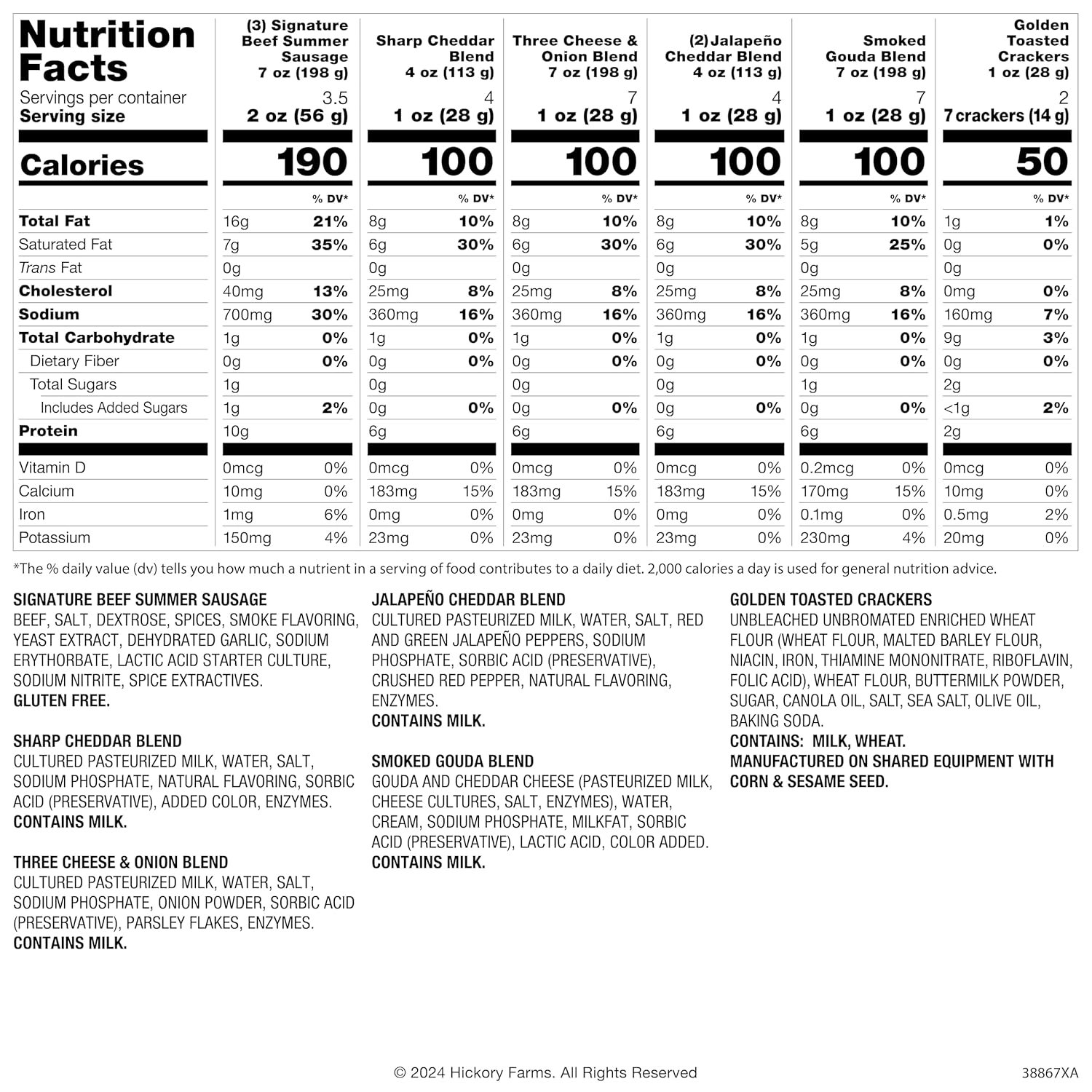
There’s a persistent myth that gift baskets are a fallback — the thing you buy when you run out of ideas. That’s only true if you’re buying blindly. A well-assembled cheese and charcuterie basket (charcuterie means cured and prepared meats like salami, prosciutto, and pâté) is one of the most universally appreciated gifts you can give a man, because it delivers a full experience: something to open, something to taste, and something to share. The challenge is that “gift basket” covers an enormous range — from a $39 Hickory Farms sampler with a summer sausage and a shelf-stable cheddar block, to a $400 Murray’s Cheese custom build packed with cave-aged wheels and hand-selected charcuterie from named producers. This guide gives you the decision framework to navigate that range: by occasion, by the recipient’s taste profile, and by what your budget actually buys at each tier. If you’re a practitioner who has done this before — maybe you’ve sourced a few holiday baskets for clients, or you’re assembling a personal gift for a hard-to-shop-for someone — what follows is the part no one shows you: the tradeoffs.
The Three Variables That Should Drive Every Decision
Before you choose a basket, align on three things: occasion weight, recipient taste profile, and true landed cost. These aren’t marketing categories — they’re the actual levers that determine whether your basket lands or collects dust.
Occasion weight is how much the moment demands. A “thank you” after a business deal closes is a 6 out of 10. A retirement gift for a 30-year colleague is a 9. Father’s Day for a dad who grills every weekend is maybe a 7. The occasion weight tells you whether you need a basket that says “I thought of you” or one that says “I actually know you.”
Recipient taste profile is the variable most buyers skip. Food & Wine’s coverage of cheese and charcuterie gifting consistently distinguishes between three archetypes: the bold-and-savory eater (drawn to aged, funky, or spicy flavors — think sharp aged cheddar, hot coppa, whole-grain mustard), the approachable omnivore (enjoys good food but isn’t seeking intensity — a creamy brie, a mild salami, and fig jam hit the target), and the adventurous explorer (wants to be surprised — cave-aged blues, truffle-laced charcuterie, unusual regional pairings). Matching the basket’s flavor architecture to the profile is the single biggest predictor of a gift that gets talked about versus one that politely disappears.
True landed cost means the price after shipping, cold-pack fees, and any branded packaging surcharges. A basket listed at $89 from a specialty retailer with overnight cold-pack shipping in May can land at $130+. On most platforms, that math is visible if you look — but you have to look before you commit.
Budget Tiers: What You Actually Get
Here’s the honest breakdown of what each price band delivers in 2026:
By the numbers:
- $35–$65 (Hickory Farms, Harry & David): Shelf-stable items dominate. Expect processed meats, flavored nut mixes, crackers, and pasteurized spreadable cheeses. Fine as a gesture; limited provenance.
- $75–$150 (iGourmet, Mouth.com, Goldbelly): Artisan-produced items from documented small producers. Real aged cheeses (typically 60–180 days), whole-muscle charcuterie, and thoughtful condiments.
- $150–$300 (Zingerman’s, Cowgirl Creamery selections, specialty builds): Named-producer components, possible inclusion of raw-milk cheeses (aged per FDA minimums), higher edible-to-decorative ratio.
- $300–$500+ (Murray’s custom, white-glove programs): Full provenance documentation, affinage-level curation (affinage is the art of aging cheese to its peak flavor — a specialist called an affineur manages the process), custom branding, and concierge coordination.
For a gifting practitioner, the most important inflection point is $75–$150. That’s where the category stops being a commodity. Below it, you’re buying the idea of a basket. Above it, you’re buying the basket itself.
Serious Eats’ overview of charcuterie gift boxes notes that the clearest quality signal at the mid-range tier is whether the retailer names the producer on the product page — not just “artisan salami” but “salami from Fra’Mani, Berkeley, CA.” iGourmet’s product sourcing pages, for instance, consistently identify the creamery, region, and sometimes the aging duration for every cheese in their curated assortments. That level of transparency is a reliable proxy for actual quality, because retailers who know their supply chain are incentivized to show it.
Matching Basket to Occasion and Recipient
This is where the decision framework earns its keep. Use these if-then pairings as your starting structure, then adjust for budget.
Father’s Day / Birthday (Approachable Omnivore, $75–$150)
The man who grills on weekends, watches the game, and appreciates good food without seeking culinary adventure is the majority case. He will genuinely enjoy — and finish — a basket built around a few dependable pillars: a firm aged cheddar or a smoked gouda, a classic dry salami or a peppered summer sausage, and an accompaniment with a little sweetness (honey, fig jam, or a fruit paste called membrillo, made from quince). Zingerman’s hand-packed selections in this price range consistently receive favorable mentions in Food & Wine’s gift roundups for exactly this reason: the flavor balance is calibrated for broad appeal without being generic.
If X, then Y: If the recipient is a griller who keeps a well-stocked fridge and doesn’t have strong adventurous food opinions, a $95–$125 Zingerman’s or Mouth.com build is the right call. Don’t over-engineer it with cave-aged blues he won’t reach for.
Corporate Client Gift (Any Taste Profile, $150–$400)
The corporate gifting scenario has a different constraint set than personal gifting. You’re not optimizing for one person’s palate — you’re optimizing for zero offense and high perceived value across a range of recipients. Eater’s guide to ordering cheese and charcuterie online specifically flags that dietary inclusivity (avoiding pork for recipients with religious dietary restrictions, flagging nut content, sourcing kosher-certified options) is a non-negotiable consideration for corporate programs at scale.
Murray’s Cheese’s corporate gifting program overview, published on their site, details minimum order quantities (typically 12–25 units for custom branding) and offers dietary customization at the product level. For procurement managers sourcing 25–100 baskets, the math to run is: unit cost × quantity + cold-pack shipping per zone + branded packaging surcharge. At Murray’s, branded belly bands and custom tissue typically add $8–$15 per unit. At 50 units, that’s $400–$750 in packaging cost alone — relevant when presenting landed cost to a budget committee.
If X, then Y: If you’re sourcing 25+ corporate client gifts at $200–$350 per basket and need branded packaging with documented dietary options, Murray’s custom build program or Zingerman’s wholesale inquiry line are the two programs with the most transparent published minimums and customization paths. Start there before building out alternatives.
Retirement / Milestone (Bold-and-Savory or Explorer, $200–$500)
A retirement gift or a significant-milestone gift for a man who takes food seriously is the occasion that justifies the premium tier. This is where affinage — the expert aging of cheese to its peak expression — becomes a real differentiator rather than marketing language. A basket that includes a wheel of Époisses (a pungent, washed-rind Burgundian cheese), a Soppressata from a named Calabrian producer, and a proper aged Manchego from La Mancha tells a story that a standard assortment doesn’t. Cowgirl Creamery’s cave-aged selections, available through their retail program and select Goldbelly listings, are among the most frequently cited examples in this tier for domestic artisan provenance.
The honest caveat at this tier: shipping is the risk. Perishable baskets with raw-milk or washed-rind cheeses require overnight or two-day cold-pack shipping. In May 2026, overnight cold-pack rates from specialty retailers typically run $25–$45 depending on zone and weight. For a single high-occasion gift, that’s acceptable. For a program, it’s a line item that needs planning.
If X, then Y: If the occasion is a genuine milestone and the recipient is a food-serious person who will notice the difference between commodity and artisan, spend $250–$400 at a white-glove tier and treat the shipping cost as part of the gift, not an add-on to minimize.
The Edible-to-Decorative Ratio: The Metric Nobody Talks About
One of the most useful analytical lenses for evaluating any basket before you buy is the edible-to-decorative ratio — what percentage of the listed contents is something you can actually eat, versus shredded paper fill, ribbon, branded tissue, and keepsake packaging. At the $35–$65 tier, decorative materials can account for 30–40% of the visual volume while representing near-zero cost to the retailer. At the $150+ tier from serious curators, the ratio should flip: the box is smaller, the components are denser, and the edible weight per dollar is meaningfully higher.
When evaluating a basket page, count the named edible SKUs, note whether weights are listed (a sign of transparency), and flag any description that leans heavily on the container itself (“beautiful hand-stained wooden crate”) without naming what’s inside it. That’s the signal that the presentation is doing the value work instead of the food.
A Few Honest Realities for 2026
Across aggregated retailer reviews and editorial coverage from outlets including Food & Wine and Eater, a few consistent patterns are worth naming:
- Harry & David and Hickory Farms remain reliable entry points for recipients who are not food-focused and for whom the gesture matters more than the provenance. If that’s your read on the situation, the $45–$65 range is genuinely fine. Don’t let anyone tell you otherwise.
- Goldbelly’s model — shipping restaurant and artisan producer items directly from source — means the quality ceiling is higher than most aggregator platforms, but the coordination complexity increases. Lead times during peak season (November–December, and increasingly May for Father’s Day) regularly run 10–14 days. Order early.
- Mouth.com’s editorial curation is consistently praised for surfacing small American producers with genuine backstories, particularly in the $75–$130 range for meat-and-cheese focused assortments.
The decision rule that holds across all tiers: match the basket’s complexity to the recipient’s curiosity, and match the tier to the occasion’s weight. A thoughtful $100 basket calibrated to who someone actually is will outperform a reflexive $300 basket chosen for its price point every time.